Virtual Twilight Magic by Real Estate Photography Luminis Media
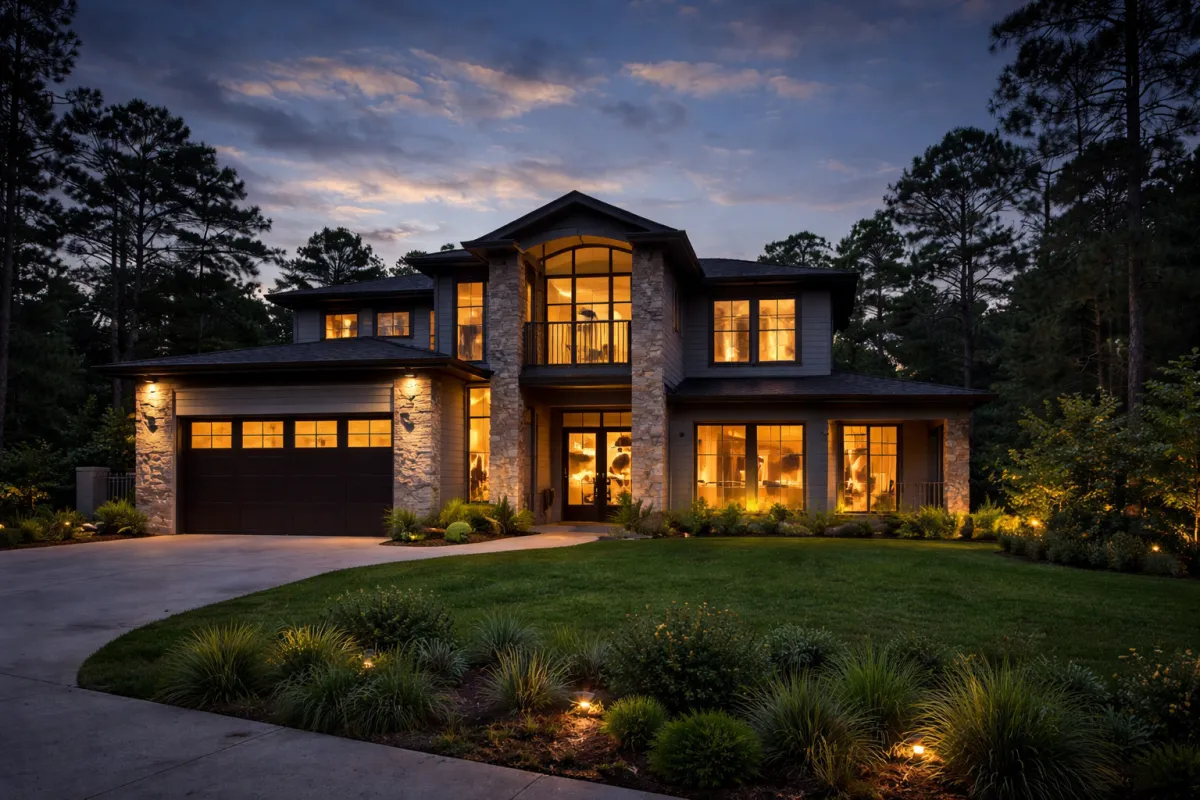
There is something unmistakable about a home at blue hour. The sky settles into a cobalt gradient, interior lights glow amber, and edges sharpen in contrast. For real estate, that look is a magnet. It stops scrolling thumbs and commands a second look. The catch, of course, is that perfect twilight rarely matches your listing schedule or local weather, and running back to each address at dusk is not always practical. That is where virtual twilight earns its place, not as a trick, but as a disciplined craft that translates the mood of evening into reliable, on brand marketing visuals.
At Luminis Media, we treat virtual twilight like architectural retouching with narrative intent. The goal is to make the property feel warmly alive and well maintained, not to hide problems or invent features. Virtual dusk is part technical, part editorial judgment. When handled with care, it can raise the perceived value of a listing, help a luxury facade punch above the fold, and keep your marketing calendar on track when the forecast refuses to cooperate.
What virtual twilight actually is
Virtual twilight is a post production approach that transforms a well exposed daytime exterior into a convincingly dusk scene. It involves sky replacement, controlled luminosity shifts across the facade and landscaping, simulated interior lighting, and realism checks like reflections, shadows, and color temperature balance. Luminis Media real estate photography teams plan for twilight during capture, even if the shoot happens at noon. We frame clean sightlines, bracket exposures for windows and highlights, and capture neutral color references that guide grading later.
The best way to understand virtual twilight is to think of it as mood translation instead of visual overhaul. We are not changing the shape of the property or adding imaginary fixtures. We are revealing the geometry and texture of the home under different light. That distinction matters for compliance, for ethics, and for keeping buyer expectations accurate.
Why buyers respond to dusk images
Evening imagery triggers a simple emotional equation. Warm interior light against a cooler sky reads as comfort and invitation. Repetitive forms on a modern facade, often flat in midday sun, gain depth when accent lighting defines edges. Landscaping appears more curated because the eye focuses on lit elements instead of sun splatter. In our experience with real estate photography Luminis Media campaigns, a strong hero twilight can increase click throughs on listing portals and improve time spent on page. We do not rely on single numbers, since markets and seasons vary, but the pattern repeats often enough to be considered a principle rather than a coincidence.
On social media carousels, the virtual twilight hero image tends to anchor the set. The following frames can carry daylight details, floor plan graphics, or a short video. Attention is a scarce commodity. Dusk visuals buy you a few precious seconds to make the case for the property.
Not every home should glow like a resort
Restraint is part of the craft. A small ranch with a single porch sconce does not need the lighting profile of a boutique hotel. Luminis Media listing photography editors calibrate the brightness of windows and artificial lights to what the house can plausibly support. We study the visible fixtures and make sure the glow corresponds to their placement. If the kitchen has recessed lights, we give the kitchen a soft, directional warmth. If the home shows a single bedside lamp through a window, we let it be a modest accent instead of turning the room into a lantern.
We also consider geography. A coastal cottage near fog banks wears a cooler sky and gentler highlights. A desert property tolerates a more saturated horizon and crisper shadows. Luxury real estate photography Luminis Media work often embraces bolder skies and carefully defined edge lighting, but even in that segment, taste beats spectacle.
A pragmatic workflow for consistent results
Virtual twilight is only as good as the base images and the editing logic behind them. Our luminis.media real estate photography teams use a repeatable capture and retouch pipeline so that the look feels cinematic but stays believable.
- Capture: wide and mid exteriors with bracketed exposures, polarizer off for sky consistency, a clean shot of the driveway and any reflective surfaces, and separate frames with interior lights on when possible.
- Foundation grade: neutral white balance, perspective correction, and removal of chromatic aberration. We retain enough highlight detail in windows and trim to allow a natural falloff later.
- Sky and environment: sky selection based on region and weather plausibility, then integration with edge refinement, aerial perspective haze, and subtle horizon spill so it does not look stickered on.
- Light logic: simulate interior and landscape lights with masked luminance painting, guided by actual fixtures. Adjust micro contrast to create depth without haloing.
- Realism checks: reflections in windows and vehicles, shadow direction alignment, and color temperature balance between interior amber and exterior blue.
That workflow sounds technical, but it is fundamentally about storytelling. The light should lead the eye from the driveway to the entry, then to one or two key rooms. If the composition shows a pool, the water should capture a tea tinted reflection from interior windows. If the architecture leans modern, we favor crisp edges and slightly cooler neutrals. For a craftsman bungalow, we dial in more warmth and softer transitions.
Starting smart at capture
Even though virtual twilight happens in post, the choices you make at the shoot either limit or expand what is possible later. Luminis Media real estate photographer teams often arrive prepared with a simple on site checklist. We turn on practical lights even if the sun is high. We shoot a frame with the garage door closed, then a clean frame without the car in the driveway. Exterior sconces get wiped quickly to avoid crusty halos if we mimic their glow. For complex window walls, we pull a bracket that protects interior detail, because nothing ruins a dusk look faster than featureless white panes that should show life inside.
Angles matter too. A virtual dusk transformation needs clean rooflines and a separation between the subject and neighboring homes. We step a bit lower or higher to avoid background clutter. We also watch foliage. Leaves that look charming at midday can block the interior warmth that sells the evening mood. A slight reposition unlocks a stronger glow path.
Lighting logic, not light tricks
Readers often ask where virtual twilight crosses the line into misrepresentation. The answer lies in light logic. Every luminous area should be motivated by a source you could defend during a showing. If we brighten a living room window, there should be a fixture visible or at least plausible within that room. If we let a soffit glow, it needs to align with a real strip or recessed can. At Luminis Media property photography scale, editors use a map of the facade to avoid duplicate glows that give away the effect. Color temperature variation also matters. Not every bulb is the same Kelvin. A home with old warm bulbs mixed with newer LED downlights will present a blend. We maintain that blend rather than homogenize everything to one amber hue.
Exterior color during dusk is cooler, but not uniformly blue. Concrete holds neutral grays and slight warmth from nearby windows. Grass darkens but keeps a green base. Wood trim absorbs amber faster. These micro cues, easy to overlook, separate a convincing twilight from an obviously edited one.
Windows, reflections, and interior narratives
Windows are the soul of a virtual dusk image. The viewer reads them as signs of life. If the property is vacant, we still aim to suggest occupancy through controlled glow and faint silhouette hints, never through invented furnishings. With staged homes, we harmonize the visible decor with the outdoor look. In luxury real estate photography luminis.media projects, glass railings and large sliders invite nuanced reflections. We feather the new sky into those planes at the correct angle of incidence. Automotive reflections in a driveway, if a car remains, need to echo the environment too. The eye spots any mismatch unconsciously.
Curtains and blinds deserve attention. Closed blinds can look like blank slabs if over brightened. We lift them enough to reveal texture, keeping the vertical or horizontal rhythm intact. Sheer curtains become a gift at dusk, diffusing the interior light and adding narrative without resorting to heavy edits.
Regulatory guardrails and ethical standards
MLS rules vary. In many markets, virtual twilight is allowed provided no material feature is altered or obscured. We stay on the safe side. That means no moving power lines, no erasing neighboring structures that would be visible from the advertised angle, and no adding landscaping or fixtures that do not exist. If the listing copy mentions new landscape lighting and it is not yet installed, we do not fake it. Where a sky replacement would hide a mountain view that matters to the listing, we compose to keep the view or we do not apply virtual dusk to that frame. Real estate photographer luminis.media editors flag any edge case for agent approval.
Ethics also includes disclosure. Some brokerages prefer to note virtual twilight in the photo caption, particularly for stricter MLSs. We support that choice. Buyers do not punish an honest statement. They punish bait and switch.
When virtual twilight earns its keep
Virtual dusk is not a cure all. It works best when the property and market context align. Here is a compact filter we use with agents before recommending it:
- Architecturally distinct facade or clean symmetry that will benefit from edge definition.
- Visible window count enough to build a warm rhythm without forcing light where none exists.
- Landscaping that reads well in silhouette and does not rely on midday color for impact.
- Weather or schedule constraints that make a real twilight shoot unrealistic for launch.
- Marketing plan that uses one hero exterior to anchor ads, postcards, or the MLS gallery.
If a home fails most of these checks, we often steer resources toward daylight exteriors and a strong interior set, plus a brief lifestyle reel.
Results that matter to listings
Across dozens of Luminis Media real estate photos packages each month, twilight features tend to pull stronger engagement. On portal feeds that show one thumbnail and title, the properties leading with a balanced dusk hero draw more saves during the first week. We have seen days on market tighten in balanced conditions when the home already aligns on price and presentation. It would be irresponsible to credit virtual dusk alone for a sale, but when a listing needs a headline image to rise above comparables, it reliably helps.
We hear it from agents after open houses. Prospective buyers mention the evening photo, then ask about the outdoor lights or whether the living room feels as cozy in person. That is precisely the job of marketing media, to spark a conversation where the agent can guide the next step.
Integrating virtual dusk with video and reels
Many agents now expect a stills and motion package. Luminis Media real estate videography teams approach dusk differently in motion. Simulated twilight for video is possible, but full sequence replacements can drift into the uncanny. Instead, we often capture a real 15 to 20 minute dusk window onsite if schedule allows, then blend a few hero clips with the daytime story. When real twilight capture is not feasible, we keep video in daylight and let the virtual dusk still serve as the hook image across platforms. Short vertical edits, 10 to 20 seconds, pair nicely with a single dusk still as the cover frame, delivering cohesion without over editing the footage.
For high end properties, luminis.media real estate videography sometimes deploys a time blended sequence, starting in late afternoon light and ending with a quick blue hour exterior pullback. It requires planning and a client who can accommodate a longer shoot block, but the result is worth it for flagship listings.
Luxury cues without excess
Luxury real estate puts more weight on brand tone. Luminis Media luxury real estate photography balances drama with restraint. On a glass box hillside home, we emphasize linear lighting and sky gradients that flatter the architecture. On a classical estate, we lean into warm lawn wash and gentle column highlights, avoiding neon saturation. Pool edges get a secondary glow and calm reflections, never mirror perfect unless the water was truly still.
The test we use is simple. Would an architect or builder feel proud of the image as a representation of their work, not just as an ad? If the answer is yes, the twilight edit has done its job.
Pricing, turnaround, and what to expect
Virtual twilight is an add on that sits between basic retouching and heavy compositing. For most exteriors, one or two hero frames receive the treatment. Turnaround is typically next business day for standard listings, same day rush on request when schedule permits. Complex glass facades, intricate tree lines, or multiple reflective vehicles can extend editing time. We clarify those variables upfront so your marketing calendar stays accurate.
Agents often ask about bundles. Many of our Luminis Media property photography packages include a twilight option paired with daylight exteriors, interiors, and a short social cut. That way, you launch with a cohesive set rather than bolting on a single glam shot later.
Collaboration with sellers and stagers
Virtual dusk benefits from small on site decisions. Before the shoot, we send a short prep note to sellers. Replace any expired exterior bulbs. Clean glass on key windows. Tidy hose lines and tuck trash bins where they will not appear. If the home has smart lighting, set scenes to warm early. For vacant homes, consider leaving simple warm bulbs installed for the shoot, even if https://facebook.com/luminismedia/ furniture has already been removed. The cost is minimal, and the glow communicates care.
When working with stagers, we align decor choices that will be visible through windows. Simple shade control, like tilting blinds to allow a sliver of interior context, helps the edit feel rooted. These steps matter for any real estate photographer Luminis Media sends into the field. They do not add significant time, but they elevate the twilight outcome.
Quality control and the last five percent
The fastest path to a bad virtual dusk is rushing the last mile. We run a pass specifically to catch telltale artifacts. Look for halos along rooflines. Check that the sky gradient transitions behind thin branches, not just around them. Make sure the brightest point in the frame is not a lamp reflection that steals attention from the entry. Verify address numbers remain legible. Confirm that any color cast on white trim is plausible for the described bulbs. If a gutter downspout suddenly glows, dial it back. This final discipline separates professional Luminis Media listing photography from quick filter edits.
Edge cases and when we say no
Some properties do not benefit from virtual twilight. Heavily treed lots that hide windows, exteriors with patchy paint that look better in even daylight, or homes where the main selling point is a view that dims at evening all fall into this category. If we cannot ensure a better marketing image with dusk treatment, we advise against it. Credibility matters more than novelty. That stance has earned trust with repeat clients who appreciate straightforward recommendations.
The same goes for weather reality. If a listing sits under persistent coastal gray, delivering a tropical fuchsia sunset as the hero would mislead. In those markets, a soft overcast sky replacement with a lightly warm interior can feel authentic and approachable.
How this plays across platforms and print
The twilight hero is versatile. On the MLS, it anchors the first position. On Instagram, it works as the cover image for a carousel, followed by daylight details and a reel thumbnail. For print, it often becomes the postcard front or a cover of a feature sheet. We maintain consistent color management across these uses. What glows on a phone at night can dull in CMYK print if not profiled correctly. Luminis Media real estate photos carry calibrated color targets through the pipeline so that a deep blue reads deep blue on paper, not muddy navy.
If you plan out of home signage or a magazine spread, tell us early. We will prepare a print specific export with proper sharpening and noise control for larger formats.
A quick guide for agents considering virtual dusk
For agents building a media plan, a simple framework helps. If you need a single image to headline your launch across MLS, social, and mailers, the virtual twilight hero is your workhorse. If the listing relies on a daytime view or outdoor amenities that need sun, keep the hero in daylight and add twilight as a secondary. For price bands where buyers scroll fast and compare thumbnails, dusk often earns enough attention to pay for itself in one weekend of traffic. And if you are balancing a tight timeline with unpredictable weather, virtual dusk from a solid daytime capture gives you control over schedule without sacrificing mood.
Where Luminis Media fits in your media stack
Whether you know us from luminis.media real estate photography, our short form videos, or a neighbor’s postcard, you have probably seen our dusk work in the wild. We approach the medium with respect for architecture and the realities of selling homes. Virtual twilight is one of many tools in that kit. When used at the right moment, it supports your narrative without overshadowing the property itself.
Agents come to Luminis Media for consistency as much as for the dramatic image. That means your listing on a rainy Tuesday can still show up strong by Friday morning. It means your brand remains cohesive from thumbnail to tour. And it means, when the inquiry comes asking about the photo, you can say with confidence that it is the same home, the same facade, presented at its best.
Final notes on craft and credibility
The industry does not reward gimmicks for long. Buyers get savvier each month. In that environment, virtual twilight earns its place by staying tethered to reality and to the physical logic of light. The magic is not the saturated sky. It is the care taken to align color, brightness, and story with what the house can truthfully claim.
Luminis Media real estate photography is built on that premise. From the first capture to the last pixel check, we treat the home, the seller’s goals, and the buyer’s trust as the non negotiables. That is how a virtual dusk frame does more than look pretty on a feed. It moves someone one step closer to the front door.