Night and Twilight: Luminis Media Real Estate Photographer Techniques
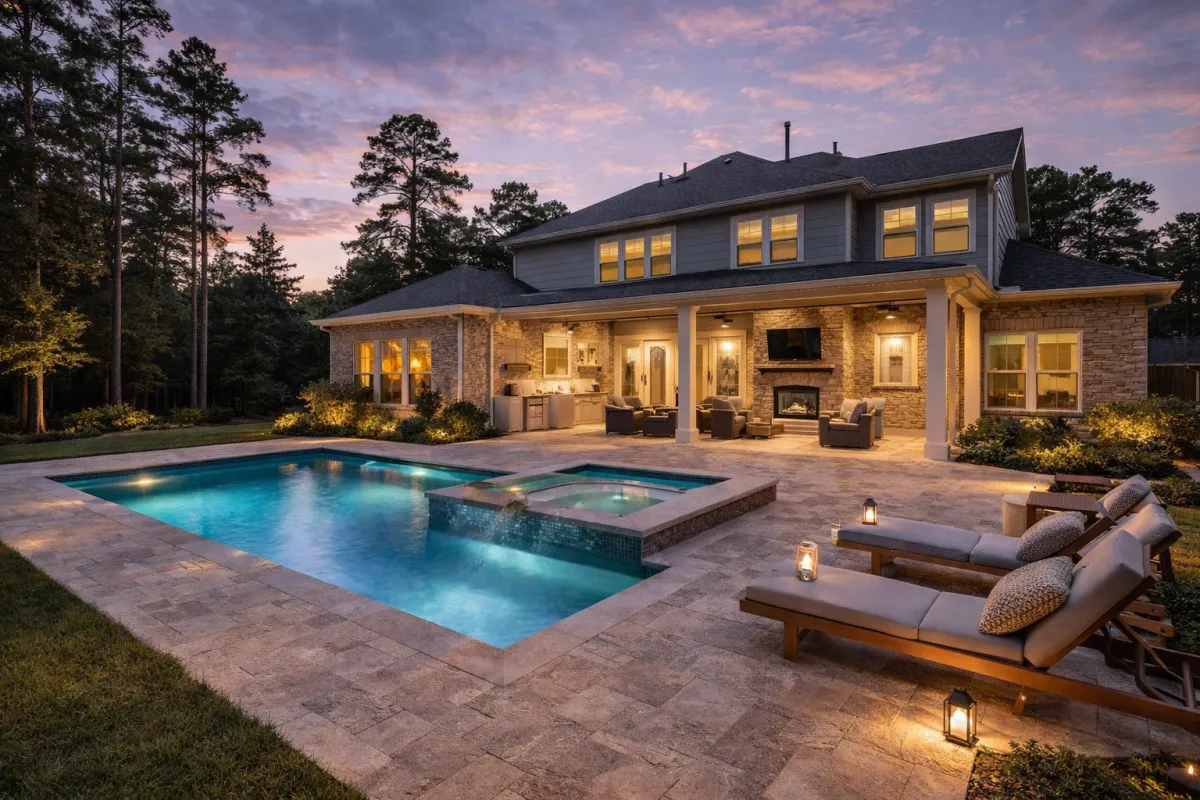
Twilight is where real estate images stop looking like documentation and start feeling like cinema. It is that brief window when the sky holds a deep cobalt gradient, exterior fixtures warm up, and windows glow like invitations. At Luminis Media, we plan entire production days around that 20 to 30 minute span, because nothing elevates a listing faster. A balanced twilight frame makes modern stucco look elegant, brick feel deliberate, and glass read as a feature instead of a reflection problem. It also tells buyers how life unfolds at the home after five o’clock, which is when most of us actually live there.
This is a practical guide to how we approach night and twilight sessions across houses, condos, and mid-rise developments. It draws on hundreds of shoots for brokers who expect speed, polish, and consistency. The people who hire Luminis Media real estate photography services want more than pretty pictures, they want an asset that moves a property. Twilight and night imagery does that reliably, provided you respect timing, manage color, and control contrast with discipline.
Why twilight earns its place in the shot list
Good daylight is honest, but twilight is aspirational. It tightens up contrast, organizes the frame, and transforms chaotic neighborhoods into quiet, polished scenes. With a blue hour sky, power lines recede, varied paint tones compress toward a cohesive palette, and hard ground shadows disappear. We see better edge separation along rooflines and trees. Water features pick up color. Even modest landscaping looks curated when path lights and soffits do their work.
When we present a package of Luminis Media real estate photos, brokers often pick the twilight hero for the MLS cover. The click-through rate usually climbs, and in tight markets the listing feels premium without over-promising. For luxury exteriors, the difference is starker. Luxury real estate photography Luminis Media clients understand that a property positioned as a retreat needs to be shown at retreat hours. The pool, the fire pit, the uplights in the oaks, all of it adds up to a mood buyers will pay for.
Reading the light, not the clock
Blue hour is a moving target. West-facing homes hold sky color longer, east facades fade sooner, and dense tree canopies rob the scene of the final bounce. We plan arrival to allow at least one full circuit of the property an hour before sunset. The scout determines which elevation gets the main twilight effort, then we build the rest around that. Urban cores and coastal flats stretch the effective window, while mountain foothills cut it sharply once the sun clips a ridge. When luminis.media real estate photography crews shoot across time zones or seasons, we maintain a simple rule: watch the histogram on the sky, not the clock on the phone. Once the sky peak and the house interior are within 3 to 4 stops, it is game on.
A second nuance is sky temperature. The deeper the blue, the warmer the house needs to feel. LEDs inside often default to cool white, which can undermine the amber welcome that sells. We either warm bulbs with gels, nudge color during the window pull, or lean on selective hue shifts in post. You do not want a neon aquarium inside a midnight frame.
Scouting and homeowner prep
Night and twilight success depends on elements you control before the camera leaves the case. We send a concise checklist to agents and homeowners, and we reinforce items on site. Small oversights balloon into 10 minute fixes that you do not have at dusk.
- Replace burned out bulbs on any facade fixture, landscape path, porch, and soffit lighting. Match color temperature where possible.
- Program interior smart bulbs to a warmer setting for the shoot window. If that fails, turn on table lamps and turn off overhead cans that are too cool.
- Wet down hardscapes if appropriate. A light gloss on pavers or driveway deepens color and reduces patchy dust.
- Turn off sprinkler schedules. Water spotting on glass and pavements can ruin specular highlights.
- Close garage doors, hide bins and garden hoses, and park cars off site if street parking is not obstructing the main hero angle.
If the property sits inside an HOA with timed perimeter lights, we check the schedule in advance. On more than one occasion, a photo-ready clubhouse or entry monument went dark five minutes before peak blue. A quick call to facilities can save a reschedule.
Core exposure strategies that keep options open
We run two parallel concepts during twilight: a base ambient that home photography spring tx respects the sky, and targeted exposures for windows, landscape lights, signage, or architectural accents. Even if we expect to deliver a one-shot hero, we gather a compositing safety net. That means a steady tripod, locked composition, and a disciplined sequence.
On exteriors, we favor manual mode to hold aperture and shutter as the sky dims, nudging ISO when the noise trade-off makes sense. For stills, f/8 to f/11 keeps corners honest on wide lenses. Shutter begins around 1 to 2 seconds as the sun slips, drifting to 10 or 15 seconds near the edge of blue. ISO starts at 100 and may float to 400 or 800 for wind-shaken foliage or flags. With longer shutters, even a slight breeze will ghost leaves. If the landscaping is animated and the house is static, we capture a faster exposure just for the trees and blend it on a mask later.
Window pulls are sharper and cleaner at dusk than at noon because exterior brightness is closer to interior levels. We still often bracket 3 to 5 frames around the base, spacing at 1 stop intervals. Automated HDR can work on middle-tier projects, although for Luminis Media property photography we usually hand blend using luminosity masks or simple layer masks to retain believable contrast. The goal is a twilight frame that breathes, not a rubbery tone map.
Managing color in a mixed-light maze
Twilight is gorgeous because it is mixed light. But that mix bites back if you do not control color relationships. We set a base white balance slightly cool, usually between 4000 and 5000 K for the overall scene, then let warm fixtures ride warmer. If everything is neutral, nothing feels alive. The trick is to avoid green shifts from cheap LEDs and the sodium residual on older street lamps. We carry a small pack of warming gels and a few minus-green gels to tame porch lights or pendants near windows. For interiors that bleed into exteriors, we set a camera position that favors incandescent lamps or stagers’ fixtures, and turn off the problem cans. When a foyer chandelier throws color fringes, it is often faster to do a short exposure with the chandelier off and blend it into the final to remove the cast.
Watercolor skies from high humidity can push magenta. Urban LED signage can push cyan. Both can look futuristic or cheap depending on the property. On luxury real estate photography luminis.media projects, we are conservative, nudging tint just enough to keep skin tones plausible for lifestyle frames and grass believable for daylight anchors if we cut a same-night interior.
Exterior lighting design on location
We travel with small battery LEDs and a couple of compact strobes, but we use them sparingly outside. The property’s own lights should do the heavy lifting. Supplemental light is for problem solving, not theatrics. If a deep porch caves in to black, a dimmable LED panel feathered across the soffit at 10 percent power can lift detail without advertising the intervention. If a sign or address plaque matters for a development, a low-angle strobe at minimum output, flagged to avoid hot spots, can give it a gentle presence at 1 or 2 stops under the base exposure.
For pools and spas, leave underwater lights on long enough to purge air bubbles. Surface agitation reads noisy in long exposures. If the pool LEDs cycle colors, lock them to one tone. Deep blue looks premium next to warm windows. Purple rarely does. Path lights should all match and be on. If they do not, we shoot two quick plates and swap mismatched heads in post.
Interiors at dusk without chaos
When we shoot interiors for luminis.media real estate photos during twilight, we think of the windows as set pieces, not floodlights. Turn on the lamps that create depth in the frame and turn off the offenders that flatten the walls or throw hard shadows. We protect the view without turning the room into a cave. That usually means a window pull with an extra interior exposure lifted a stop. For wide rooms with multiple windows, practicals become the glue. A lamp on a console table at the mid-ground can buy you the perception of light continuity.
We often use the flambient approach during daylight, but at dusk the flash ratio shrinks. A low-power pop bounced off a white ceiling can crisp the cabinetry without killing the window mood. Watch polished stone and glossy tiles. They will reveal a flash faster at night, since specular highlights sit against darker midtones. If a telltale reflection sneaks through, reposition the camera a few inches or flag the flash head. A tiny shift solves most of those headaches faster than cloning later.
Reflections, glass, and what water decides to do
At dusk, glass becomes both friend and saboteur. The glow inside is why the shot works, yet it also reflects exterior light sources you never noticed before. We walk the main hero angle with a polarizer, not to torque it to extremes, but to fine tune reflections on windows and car paint if a driveway is in frame. A CPL also deepens the sky slightly at moderate angles, although it can unevenly darken ultrawide skies. We test and commit quickly, since filters cost seconds you do not have at peak.
After a quick rinse on a driveway, the surface can bloom with speculars. That is good, up to a point. If the driveway turns into a mirror for the neighbor’s garage light, we mask it with the car we brought or use a flag just out of frame. On waterfront properties, be realistic. Long exposures will silk the water, which reads calm and expensive, but only if the wind is low. High wind chops the surface into glitter that becomes noise at high ISO. We grab a faster plate at ISO 800 and a slower one at ISO 100 and decide in post which feels more natural for the scene.
Weather and seasonal adjustments
Some of our favorite Luminis Media listing photography sessions happen on days brokers feared. Broken clouds can explode with color ten minutes after sunset. The risk is that those same clouds eat the blue hour early. In winter, twilight goes cold and clean, useful for properties with holiday lighting or strong modern lines. In summer, heat shimmer and bug density can make long exposures soft. Bring bug spray and wipe the lens often. If coastal fog drops in, pivot to details and vignettes - lit address numbers, glowing landscape pockets, the outdoor fireplace - then promise a reshoot of the hero when the marine layer breaks. Agents appreciate the salvage.
Aerials and motion at dusk
Real estate videography Luminis Media teams schedule drone shots with the same discipline as stills. The drone needs to be in the air and ready to record when the histogram says go. Gimbals behave better in calm air, so we often catch aerial exteriors 10 to 15 minutes before terrestrial peak and then return to ground for the hero stills. FAA daylight waiver needs vary by jurisdiction, and local restrictions or airspace rules can limit true night operations. When legal twilight is the limit, squeeze every frame. We build moves that keep the bright house anchored as the sky deepens - a slow crane up and slide, an arc that reveals the pool glow, or a simple push through landscaping to the entry. On the edit, motion feels best at 60 to 80 percent of real time. Faster reads like a promo, slower risks dragging.
For gimbal walk-throughs, set white balance manually. Auto WB will chase the mix from room to room and destroy continuity. If we cut outdoor twilight to interior, we maintain a consistent look by carrying the window blue in the grade rather than trying to neutralize it. The result is a cohesive piece that feels like a single evening, not a patchwork of shots.
A field-proven location workflow
We treat twilight like a live event. Everyone has a role, and each role protects the schedule. A typical luminis.media real estate photography crew of two divides tasks cleanly. One manages the hero exterior composition, levels the tripod, dials exposure, and calls plates. The other runs lighting checks, turns fixtures on, closes blinds on problem windows, and stages small items. Communication is hand signals when the shutter is running. We stage secondary angles earlier in the evening with rough exposures and return to them after the main hero is banked. If the property has a standout backyard, we flip the order and commit to that as the hero, then open the front elevation as the sky moves toward nautical blue.
Post-production that respects the moment
Twilight post needs a gentle hand. We begin in Lightroom for global shaping, then move to Photoshop for plate assembly. On the base exposure, we protect the deepest blue in the sky by setting the white point conservatively and lifting shadows selectively on the structure. We often add a very mild blue saturation bump while holding the hue, then counterbalance with a tiny warmth push on yellows to keep the interior glow alive. Halation control matters. Bright fixtures can bloom in a way that feels like a smartphone filter. We usually lower highlights slightly and add a masked clarity pass to the house edges to retrace the silhouette.
For composites, simple masks beat complex methods. A soft brush at low flow is often all you need to bring in a clean window pull, a sharper tree plate, or a corrected sign. If a neighborhood street lamp contaminates a soffit with a green cast, select a narrow hue range and desaturate that green locally rather than trying to neutralize the entire image. On houses with dark siding, keep noise reduction modest. Over-smoothing erases the tooth that communicates material quality.
Sky replacements are a last resort for Luminis Media real estate photos. We prefer the real sky, even if it is quieter than the brochure version. If weather forced a swap, we choose a sky that matches the scene’s geometry and light direction, and we keep saturation believable. The goal is to make the property feel like evening, not fantasy.
Common pitfalls and how to steer around them
The fastest way to ruin a dusk frame is to let the exterior go dead while waiting on interiors. If the homeowner is still arriving or a stager is tweaking a pillow at T minus five, we triage. Shoot the clean elevation first. You can fix a crooked throw later, you cannot bring back a missed sky. Another trap is mixed bulb failure. One dead uplight near the entry reads like neglect. If there is no spare bulb and no time, shift the angle or let negative space hide the missing light. We have taped a small LED to a downspout more than once to stitch a gap in a run of path lights. It is not elegant, but it preserves the rhythm.
The other big one is over-lighting with flash. Photographers new to night shoots try to fix everything with big pops. It looks garish. Use the home’s own lighting as the hero and nudge, do not bulldoze. Finally, watch the neighbors. Porch TVs and garage lights can flicker if they run on pulse width modulation, which creates banding in certain shutter speeds. Nudge shutter time a notch and test before committing to a 15 second plate.
Safety, logistics, and being a good neighbor
Twilight shoots happen when people walk dogs, haul trash bins, or check mail. We cone off the tripod footprint and position gear cases where no one can trip. If the property sits on a busy street, we bring a reflective vest and headlamps for teardown. Doors stay locked unless someone is within sight of them. With vacant luxury listings, we clear with security and the alarm company before and after. Drones at dusk draw attention. We brief the agent to handle questions while we work, and we keep flight times tight to avoid being a nuisance. The result is smoother sessions and better relationships, which lead to the referrals that keep Luminis Media real estate photography busy.
Selling twilight to clients with outcomes, not adjectives
Not every listing needs a twilight. Condos without exterior interest and homes with blocked facades might benefit more from a strong daytime set and detail vignettes. But for properties with architectural lines, interesting fenestration, pools, or landscape lighting, a twilight session is low-cost leverage. We price it as an add-on for listing photography Luminis Media packages, and we show agents an A - B of a similar property, day vs dusk, with basic performance metrics from their MLS dashboard or site analytics when available. We do not promise a percentage boost, we promise differentiation. In slower markets, that is often enough. For high-end custom homes, we build twilight into the base scope. It aligns with the seller’s expectations and the builder’s portfolio needs.
When night is the right answer
There is twilight, and there is true night. We choose full night when the subject relies on lighting features that only come alive in darkness. Downtown towers with crown lighting, golf community clubhouses with extensive path systems, and hospitality developments with fire elements all benefit from deeper night. Real estate photographer Luminis Media crews weigh the risk of losing sky context against the gain in lighting drama. We often do both, a lighter blue hour hero for MLS, and a true night frame for brochures, social, and the developer’s site. Real estate videography luminis.media pieces also like the deeper night, since motion against bright pin lights reads clean at lower shutter angles.
Real case notes from the field
A mid-century in the hills had a carport that photographed like a cave. By day, too contrasty. At dusk, the house glowed but the carport still collapsed. We fixed it with a single LED tube hidden along the beam, set to 3000 K, at 5 percent brightness. It did not look lit, it looked finished. The agent used that hero at the top of every ad. Offer accepted in six days after three months of stale daylight marketing.
A coastal new build had mismatched pool LEDs - half warm, half cool. We did not have access to the controls. We shot two plates as the colors cycled close enough, then masked a consistent blue across the frame in post. The builder appreciated the discretion. The next phase of homes launched with matched fixtures.
A downtown townhouse had a streetlight throwing green into their white stucco. No way to gel it. We made a short exposure with a flag on a painter’s pole, just off frame, to block the green from the wall, then blended that portion into the base. Ten minutes to solve, hours saved in retouching and far more natural than global desaturation.
Deliverables that help listings work harder
For luminis.media real estate photographer packages, we build deliverables around how agents actually use images. That means a wide hero in landscape orientation for MLS and portals, a vertical crop for mobile-first ads, and a true vertical for signage. We export three sizes - full resolution for print, web optimized with generous quality, and social ready with subtle sharpening. File naming includes address, view tag, and time stamp. We often include one alternate grade: a slightly cooler version for modern builds, a slightly warmer version for traditional homes. Agents appreciate options without clutter, and it reduces their temptation to over-filter.
For real estate videography Luminis Media clients, we include a short twilight micro-cut - roughly 15 to 25 seconds - that they can post within hours of the shoot while we finish the full edit. It buys attention and sets the tone for the listing launch.
The business side few talk about
Twilight compresses schedule risk. Traffic, late cleaners, and weather stack against a narrow shot window. To protect margins, we set a hard on-site ready time 90 minutes before sunset, and we build a small buffer for reshoots into the rate. We reschedule for high winds, heavy rain, or smoke that flattens the sky into a gray sheet. If a client insists we shoot regardless, we document expectations and deliver a clean set with the option to return for hero exteriors on a better evening. The candid conversation upfront keeps relationships strong. For property photography luminis.media pricing, we also bundle twilight with daytime interiors to reduce travel and setup redundancies. It is better for the client and it keeps our teams in rhythm.
A compact comparison to guide choices
When agents ask whether to book twilight or full night, we walk them through a quick matrix that weighs context and lighting features.
- Choose twilight when the architecture benefits from sky separation, when window views matter, and when you want a single hero that plays well across MLS, print, and social.
- Choose night when the property’s designed lighting is the feature, when pools and fire elements carry the mood, and when the surrounding context is cluttered or better hidden.
- Choose both when the listing is luxury, the exterior budget was significant, or the home sits on a view lot that changes character as the evening deepens.
- Skip both when the facade is obstructed by trees or cars you cannot move, or when the property relies on solar fixtures that do not output enough to register on camera.
- Rebook when weather wipes the color gradient, when half the exterior bulbs have failed, or when the client cannot prep the house to glow.
What separates a good dusk frame from a great one
Discipline and restraint. Great twilight work keeps the viewer inside the story of a home at day’s end without calling attention to the craft. It is a set of small decisions, from where you place the tripod to whether you let one hallway go quiet instead of forcing light into it. It is consistency across a gallery, so the hero belongs with its supporting frames. It is also the humility to accept that sometimes the sky will not cooperate. On those nights, a well-made, quieter dusk still reads as honest and inviting. A forced look does not.
Luminis Media real estate photography is built on that approach. Our crews arrive early, prep with purpose, and shoot with intention. We manage color, respect the property’s own lighting, and give editors real estate photography what they need to build a final that breathes. Whether you know us as real estate photographer luminis.media, property photography Luminis Media, or just the team that makes the blue hour count, the techniques are the same. They are simple, repeatable, and grounded in practice. And when the sky turns that perfect shade of cobalt, they let us get out of the way and let the house sell itself.